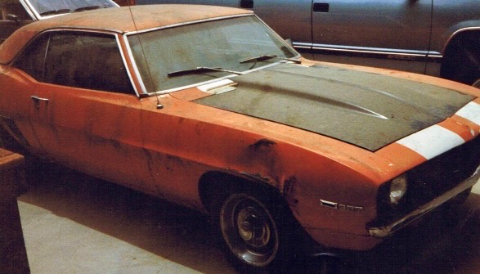
July 14, 1997 Ownership Record
Lake Arrowhead, California
Ownership Begins
Document the condition of a vehicle when it enters a new ownership period. The difficult starting point may later become one of the most meaningful parts of its story.
Preserve the photographs, records, memories, restorations, ownership periods, and milestones that explain where a vehicle has been and why it matters.
Sometimes a vehicle’s history arrives in a cardboard box. Faded photographs. Old registrations. Handwritten notes. Repair invoices. Show programs. A stack of receipts from a restoration that took years. The person who saved them may know exactly what every piece means, but the next person may not.
Other histories live almost entirely in memory. The convertible used for a wedding. The pickup that worked on the family property. The muscle car that carried friends through high school. The classic that parents, children, and grandchildren all helped keep on the road.
Those records and memories are part of the vehicle, even when they are not stamped into a data plate or shown on a build sheet. Documenting them gives the next owner, the next generation, and the wider car community a chance to understand more than the vehicle’s specifications.
Vehicle history rarely arrives as one complete, organized record. Photographs may be stored on several phones. Receipts may be divided between folders and gloveboxes. A former owner may remember an event but not the exact date. A restoration may have been completed in stages over many years.
Do not wait until every detail is known. Begin with what you can identify and preserve the context while it is still available. An approximate year, a person’s name, a location, or a short explanation can make an otherwise anonymous photograph meaningful.
A partial history that can grow is far more valuable than a perfect history that never gets started.
Formal documentation matters, but everyday moments often explain why the vehicle mattered to the people around it.
Record known ownership periods, family connections, transfers, longtime caretakers, and the people who helped keep the vehicle on the road.
Preserve restoration stages, maintenance, repairs, modifications, parts, paintwork, engine work, invoices, photographs, and the reasons behind major decisions.
Include car shows, races, rallies, cruises, parades, club gatherings, awards, long-distance trips, and other places the vehicle became part of a larger story.
Save period photographs, family pictures, magazine features, advertisements, videos, auction listings, sightings, and public appearances with as much context as possible.
The history of this 1969 Chevrolet Camaro does not begin with the finished car shown today. Its documented ownership chapter starts in 1997, when it was acquired as a worn orange project needing extensive mechanical, electrical, interior, and body work.
Later entries show the restored blue Camaro participating in major automotive events and racing at the Super Chevy Show. Each photograph has a date, location, entry type, and connection to the same VIN.
Together, the entries explain a transformation that no single current photograph could communicate.
July 14, 1997 Ownership Record
Lake Arrowhead, California
Document the condition of a vehicle when it enters a new ownership period. The difficult starting point may later become one of the most meaningful parts of its story.
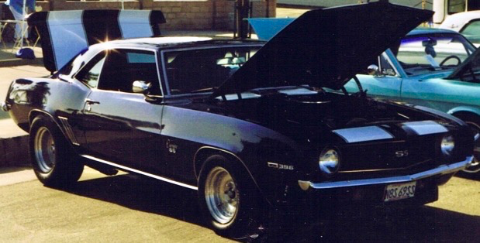
September 17–20, 1998 Event
San Bernardino, California
Event photographs establish where the vehicle appeared, when it was there, and how it looked during that period of its life.
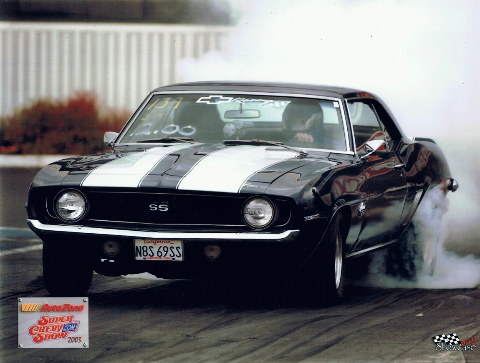
May 1–4, 2003 Race
Pomona, California
Race entries, results, photographs, and locations preserve how a vehicle was used—not only how it looked while parked.
A photograph may show a car parked outside a house, but not that it was taken the day the owner brought it home. A receipt may list parts, but not that the repair was completed before a cross-country trip. A show trophy may survive, while the event name and year are forgotten.
Add names, dates, locations, relationships, and short explanations whenever they are known. Ask longtime owners and family members what they remember. Record their answers before those details disappear.
The goal is not only to collect evidence. It is to preserve enough context that someone decades from now can understand what happened and why it was meaningful.
You can begin with only a VIN, a photograph, and one known moment.
Start with the VIN and the best available year, make, model, trim, body style, and identifying details.
For an older vehicle, use the Classic Car VIN Location Reference if the identifier is difficult to find, and read What Can a Classic-Car VIN Tell You? to understand what the identifier may establish.
Document an ownership period, restoration, event, award, sighting, road trip, race, or family memory with the date and location you know.
Add photographs, videos, receipts, references, and a description explaining how each item connects to the vehicle.
Original records should still be protected and stored carefully. Auto Lineage does not replace the value of a signed title, original invoice, build sheet, photograph, or restoration receipt.
It gives those materials a connected digital home. Each vehicle is organized around its VIN, and individual moments can be added as lineage entries so photographs, ownership periods, restorations, events, awards, races, and supporting references remain connected to the car.
A family member may eventually inherit the vehicle. A collector may purchase it years later. A former owner may recognize it online. When the history has been documented, each of them has a better chance of understanding the life the vehicle had before it reached them.
If the vehicle is being prepared for a new owner, How to Document a Classic Car Before Selling It explains how to organize that history for prospective buyers and keep the record connected after the sale.
Add the vehicle and begin documenting the photographs, memories, records, and milestones that should stay with it.
Explore more guides for vehicle history and automotive events.
Discover why vehicle stories matter and how the car community can help preserve them.
Organize the vehicle’s identity, ownership history, restoration records, photographs, and other history before ownership changes.
Learn how to search for a lost vehicle from your past, preserve what you know, and receive updates if new history is added later.
Search pre-1981 VIN and serial-number locations by year, make, model, identifier length, and important exceptions.
Learn what an older VIN may establish and which claims require tags, stampings, factory documents, or other records.